


Quick Answer
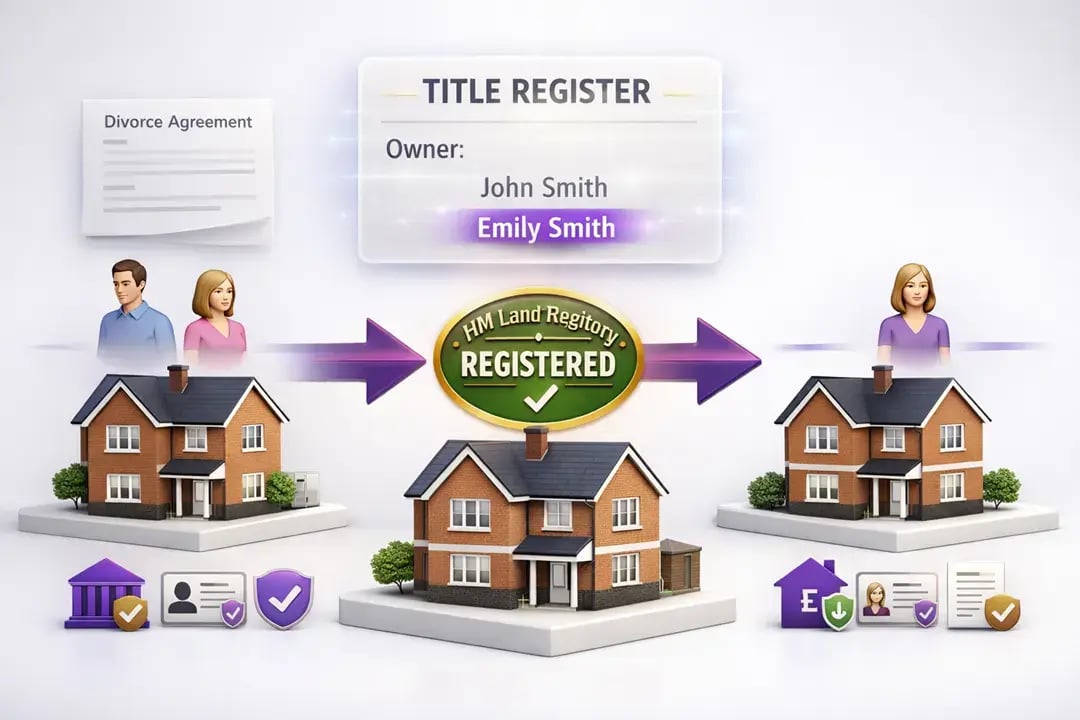
To remove an ex-spouse from a property title in the UK, you must complete a transfer of equity, obtain lender consent (if there is a mortgage), and register the change with HM Land Registry.
Divorce alone does not update property ownership.
Why Divorce Does Not Automatically Remove a Name from a Property Title
One of the most common misunderstandings is this:
A divorce agreement does not automatically update the Land Registry.
Even if:
- A court order exists
- Both parties agree
- One person remains living in the property
The legal ownership stays the same until the title register is formally updated.
In simple terms:
The divorce settles the agreement — but the Land Registry must still be updated separately.
What Happened in Practice
When James finalised his divorce, he believed everything had been resolved.
-
The paperwork was signed.
-
The agreement was clear.
-
The property was to remain his.
But months later, when he tried to remortgage, the process stopped immediately.
His ex-spouse was still listed on the title.
Legally, nothing had changed.
What It Means to Remove an Ex-Spouse from a Property Title
This process is known as a transfer of equity.
A transfer of equity:
- Removes one party from legal ownership
- Transfers their share to the remaining owner (or another party)
- Updates the official HM Land Registry record
Until this is completed, both individuals remain legally tied to the property — regardless of any personal agreement.
The Most Common Mistakes
Assuming the Divorce Handles Everything
Many people believe the divorce automatically updates ownership.
It does not.
The agreement must still be reflected on the title register.
Delaying the Transfer
It is common to delay this step — especially if one party remains in the property.
This creates risk:
- The ex-spouse may still be legally liable
- Selling or refinancing can be blocked
- Disputes become more likely
Overlooking Mortgage Requirements
If there is a mortgage:
- The lender must approve the transfer
- The remaining owner must meet the affordability checks
Without lender consent, the transfer cannot proceed.
Ignoring Stamp Duty (SDLT)
Stamp Duty Land Tax may apply if:
- There is a financial payment between the parties
- A mortgage is being transferred
This is often missed and can delay the process.
Submitting Incorrect Documents
Even with full agreement, Land Registry requirements are strict.
Mistakes can lead to:
- Rejection of the application
- Delays of several weeks or months
- Additional queries
Step 1: Confirm the Legal Agreement
You need a clear agreement, such as:
- Divorce settlement
- Court order
- Written mutual agreement
Step 2: Obtain Mortgage Approval (if applicable)
If the property is mortgaged:
- Notify the lender
- Obtain formal consent
- Pass affordability checks
Step 3: Prepare Legal Documentation
This typically includes:
- Transfer of ownership documentation
- Application to update the property register
- Identity verification
Accuracy is critical at this stage.
Step 4: Register the Change
Submit the application to HM Land Registry.
Only once processed does the ownership officially change.
How Long Does It Take?
- Document preparation: 1–2 weeks
- Land Registry processing: several weeks to months
Timescales vary depending on complexity and the Land Registry workload.
When This Becomes Urgent
Most people only discover the issue when:
- Remortgaging
- Selling the property
- Resolving a financial issue
At that point, delays can become costly and stressful.
The Risks of Leaving It Unresolved
If your ex-spouse remains on the title:
- They may still have legal rights over the property
- Financial liabilities may not be fully separated
- Transactions can be delayed or blocked
This is not just administrative — it is a legal risk.
Need Help Removing an Ex-Spouse from a Property Title?
We handle the full transfer of equity process for you, including:
- Preparing all required documents
- Managing identity verification
- Submitting to HM Land Registry
- Ensuring the title is updated correctly
👉 Start your transfer today or request a fixed-fee quote.
Key Takeaway
Divorce settles personal arrangements.
But property ownership is defined by the Land Registry.
If the title is not updated, the legal position remains unchanged.
Removing an ex-spouse from a property title is straightforward — but it must be completed properly.
FAQs
How do you remove an ex-spouse from a property title in the UK?
By completing a transfer of equity, obtaining lender consent (if required), and registering the change with HM Land Registry.
Does divorce automatically remove a name from a house title?
No. The title must be updated separately through a legal process.
Do both parties need to agree?
Yes, unless there is a court order.
Is Stamp Duty payable?
It may apply depending on financial arrangements and mortgage involvement.
Can I remove someone from the mortgage and title at the same time?
Yes, but lender approval is required first.


Leave a Comment