


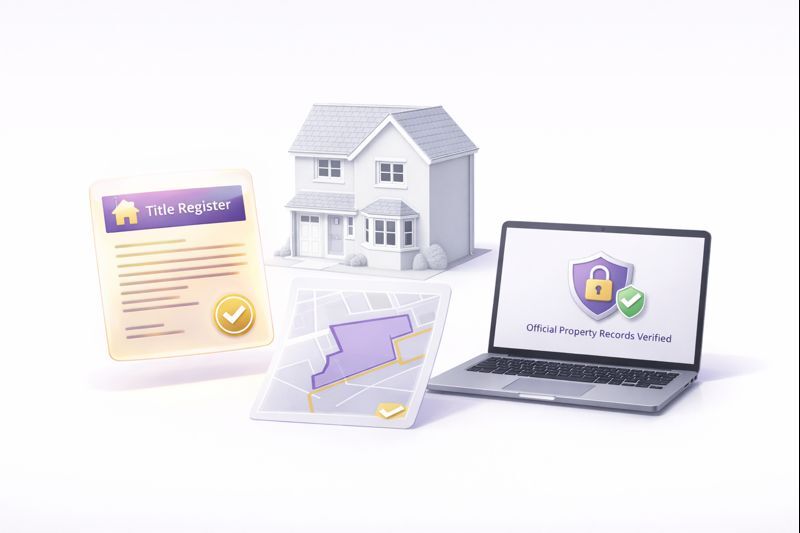
If you own a property or are buying, selling, or transferring one, you may have heard the terms “title deeds” and “title plan”.
They sound alike, but they are not the same. Not knowing the difference can cause delays, arguments, or extra legal costs.In this guide, we explain exactly what each document is, how they work together, and when you need one or both.
What Are Title Deeds?
Title deeds are a general term used to describe the legal proof of property ownership.
In modern UK property law, most landowners register their land, so they no longer need physical paper deeds. Instead, HM Land Registry records and maintains ownership digitally.
Today, when people refer to “title deeds”, they are usually discussing:
- The Title Register (legal ownership record)
- Sometimes combined with the Title Plan
Together, these form the official legal record of who owns a property and under what conditions.
What Information Do Title Deeds Contain?
The Title Register (the core part of title deeds) confirms:
- The current legal owner
- The property address
- Any mortgages or charges
- Legal restrictions or rights
- Easements (such as rights of way)
This document holds full legal authority, and lenders, buyers, and courts rely on it.
What Is a Title Plan?
A Title Plan is a scaled map that shows the general boundaries of the property registered with HM Land Registry.
It visually outlines:
- The land included in the title (usually edged in red)
- Shared access routes
- Any excluded land or additional plots
What a Title Plan Does Not Do
This is important:
- It does not show who owns the property
- It does not show mortgages or restrictions
- It does not show precise measurements
Title plans show general boundaries, not exact legal lines.
The Key Difference Explained Simply
| Feature | Title Deeds | Title Plan |
|---|---|---|
| Confirms ownership | ✅ Yes | ❌ No |
| Shows legal restrictions | ✅ Yes | ❌ No |
| Shows mortgages | ✅ Yes | ❌ No |
| Shows boundaries | Sometimes | ✅ Yes |
| Legal authority | ✅ Full | ❌ Supporting |
| Used alone | ❌ No | ❌ No |
In short:
- Title deeds confirm who owns the property
- Title plans show what land is included
Do You Need Both?
In most situations, yes.
You typically need both documents together when:
- Selling a property
- Transferring ownership
- Remortgaging
- Gifting property to family
- Resolving boundary questions
- Verifying land before purchase
That’s why Property Swift provides both documents in one request, avoiding back-and-forth delays.
Why Paper Title Deeds Are No Longer Used
Many homeowners still ask: “Where are my original deeds?”
The answer:
If your property is registered, it is no longer legally required.
HM Land Registry’s digital record replaces any old paperwork. Lenders, buyers, and solicitors depend on the official register and plan instead
Common Misconceptions
“The title plan proves ownership”
❌ False
Ownership is confirmed only by the title register.
“I need old paper deeds to sell”
❌ False
Digital records are legally sufficient.
“The title plan shows exact boundaries”
❌ False
It shows general boundaries only.
How Property Swift Makes This Simple
Property Swift removes the confusion by:- Providing official copies directly from HM Land Registry
- Delivering both the title register and title plan together
- Ensuring documents are up-to-date and legally valid
- Eliminating solicitor appointments and paperwork
Frequently Asked Questions
Is the title plan part of the title deeds?
Yes. The title plan supports the title register, but ownership is confirmed by the register, not the plan.
Can I order just the title plan?
You can, but it is rarely useful on its own. Most legal or financial processes require the title register as well.
What if my property boundaries are wrong?
A title plan shows general boundaries. For disputes, additional legal steps may be required.
Are title deeds and title registers the same?
In modern usage, yes. “Title deeds” usually refer to the title register, sometimes together with the title plan.
Final Takeaway
Title deeds = legal ownership record
Title plan = boundary outline
Both together provide full clarity and legal confidence
If you’re unsure what documents you need, Property Swift makes it easy to get the correct official records without confusion or delay.

Leave a Comment