


You’ve agreed to the property transfer.
You’ve completed the ownership paperwork.
You’re ready to submit everything to HM Land Registry.
Then progress slows.
Managing a property transfer without a conveyancer can be a challenging process. One of the most time-consuming and confusing tasks is verifying identity. HM Land Registry has strict rules to prevent money laundering and fraud. This means you cannot confirm your identity just by sending copies of documents.
Understanding how identity verification works — and how to complete it correctly — is essential to avoiding delays or rejected applications.
Why Identity Verification Can Delay Property Transfers
HM Land Registry needs an authorised professional to verify identity. You must complete this in a specific format. While the requirement itself is clear, delays commonly occur because:
- Appointments with authorised verifiers may not be immediately available
- Verification fees can vary significantly
- The verification must precisely match the ownership documentation being submitted
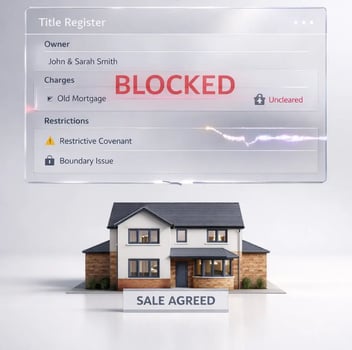
- Errors are often only discovered after submission
Even small inconsistencies can cause the Land Registry to pause or reject an application, adding weeks to the process.
Who Can Verify Identity for a Property Transfer?
A regulated professional authorised under Land Registry rules must complete identity verification. These include:
- Solicitors
- Licensed conveyancers
- Notaries public
- Barristers
- Chartered legal executives
- Certain regulated probate professionals
Practical note:
Notaries public often focus on checking documents. They may provide faster appointments. However, their fees usually range from £80 to £120 per person.
Remote Identity Verification: A Faster, Modern Option
HM Land Registry accepts secure remote identity verification when it follows approved standards.
This involves:
- A live video call with a regulated professional
- Real-time inspection of identity documents
- Visual confirmation of the individual during the call
- Certification that Land Registry security requirements have been met
What If You Don’t Have Standard Photo ID?
If you do not hold a valid passport or driving licence, alternative identity verification routes may still be available.
In some cases, trusted professionals like doctors or accountants can verify identity. They must meet Land Registry requirements and have known the person for the required time.
How Property Swift Helps Remove the Bottleneck
Identity verification is one of the most common causes of delay in self-managed property transfers.
Property Swift supports applicants by:
- Explaining the correct verification routes
- Helping arrange secure remote verification where appropriate
- Ensuring identity details align perfectly with ownership documents
- Reducing the risk of rejection due to mismatched or incomplete verification
This integrated approach helps property transfers move forward smoothly and with confidence.
Verify your identity the right way — start your property transfer with Property Swift today.
Frequently Asked Questions
Can identity be verified at the Post Office?
No. HM Land Registry does not accept Post Office document certification for property transfer identity verification.
Is remote identity verification accepted by HM Land Registry?
Yes, provided it is carried out by a regulated professional and meets Land Registry security standards.
Does identity verification expire?
Yes. Identity verification is only valid for a limited period. If submission is delayed beyond this timeframe, verification may need to be repeated.
Do I need a conveyancer just to verify my identity?
No. Identity verification can be completed independently, provided it follows Land Registry requirements.
What is identity verification for property transfers in the UK?
Identity verification is a mandatory check required by HM Land Registry to confirm who is involved in a property transfer and prevent fraud.
Can I transfer property without a conveyancer?
Yes, but identity verification must still be completed by an authorised professional following Land Registry rules.
Is online identity verification accepted by HM Land Registry?
Yes. Secure remote verification is accepted when carried out correctly by a regulated professional.
Why do property transfers get delayed at the identity stage?
Delays usually happen due to unavailable appointments, incorrect verification formats, or mismatched personal details.
How does Property Swift help with identity verification?
Property Swift guides applicants through accepted verification routes, supports secure remote verification, and ensures documents align correctly before submission.


Leave a Comment