


Whole Title vs Part of Title
Whole Title vs Part of Title: What It Means for Your Property
Not all property ownership is the same, and understanding whether you hold the whole title or only part of it can have serious legal and financial consequences.
From control over decisions to how ownership is transferred or shared, this distinction plays a key role in how your property is managed.
Understand your ownership, and update it easily with our online service.
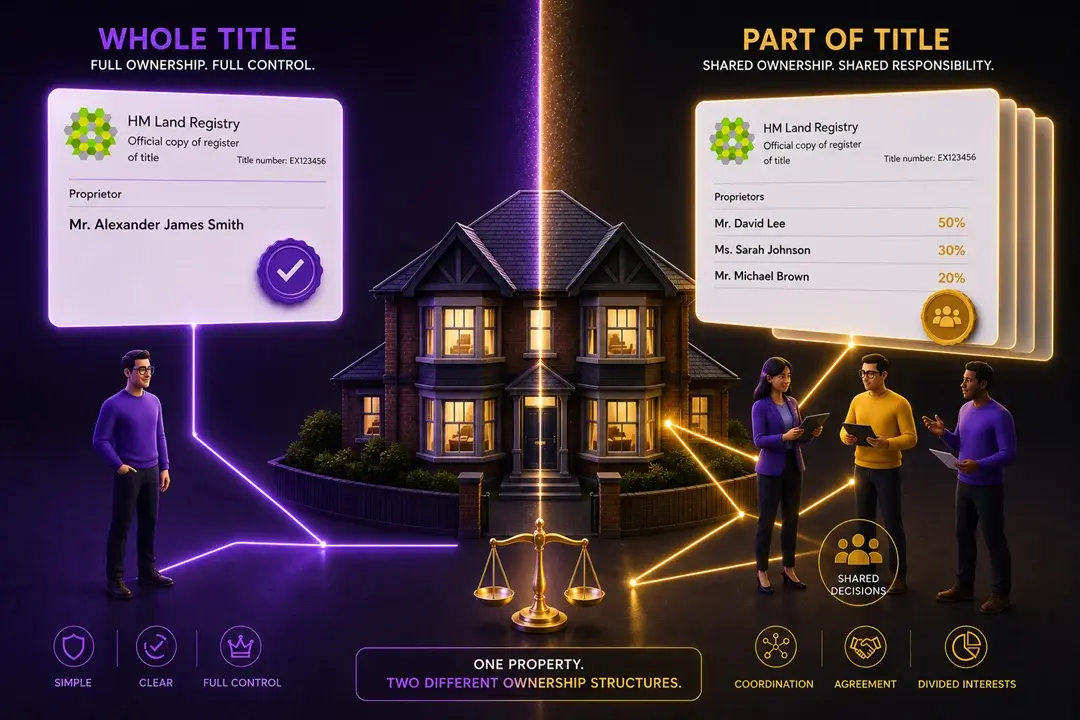
Real Life Example
When Imran inherited a property from his father, he assumed full ownership.
Months later, during a sale process, he discovered the title included another family member — meaning he only held part of the title.
What followed was delay, confusion, and legal back-and-forth.
Situations like this are more common than you might think.
Understanding your title properly from the start can save significant time, stress, and cost.
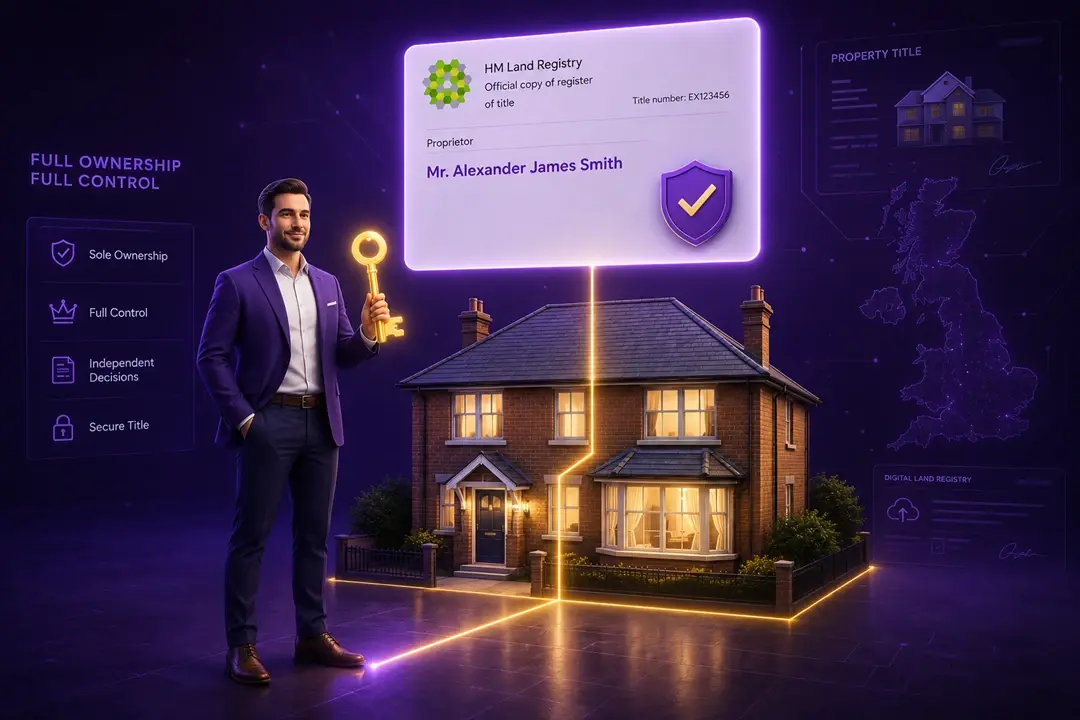
What Is Whole Title?
A whole title means a single individual or entity owns 100% of the property.
This is the simplest form of ownership.
Key Features:
- Full control over the property
- No shared ownership
- No need for consent from others
- Full responsibility for decisions
When It Applies:
- Sole ownership purchases
- Properties fully transferred to one person
- Inheritance where only one beneficiary is listed
What Is Part of Title?
Part of title refers to situations where ownership of a property is shared between two or more parties.
Each person holds a legal interest in the property.
Key Features:
- Multiple owners listed on the title
- Shared decision-making
- Ownership can be equal or unequal
- Requires coordination between parties
Important Note:
Part ownership can exist under:
- Joint tenancy
- Tenancy in common
This means your ownership structure and your share of the title are closely connected.

How HM Land Registry Records Ownership
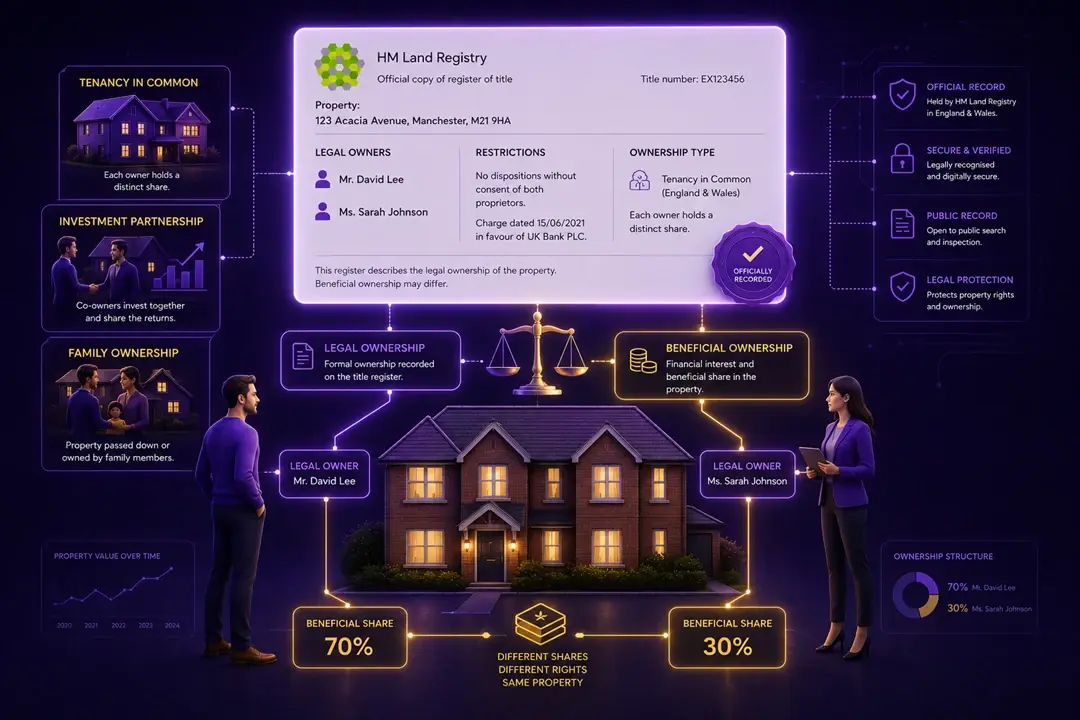
In England and Wales, property ownership is officially recorded by HM Land Registry.
The title register shows:
- Legal owners
- Restrictions (if any)
- Type of ownership
Legal vs Beneficial Ownership
Even if multiple people are listed on the title (legal ownership), the beneficial ownership may differ.
For example:
- Two owners may be on the title
- But one may own 70% and the other 30%
This is especially relevant in:
- Tenancy in common
- Investment properties
- Family arrangements
COMPARISON TABLE
Whole Title vs Part of Title
|
Feature |
Whole Title |
Part of Title |
|
Ownership |
Single owner |
Multiple owners |
|
Control |
Full control |
Shared control |
|
Decision-making |
Independent |
Requires agreement |
|
Complexity |
Simple |
More complex |
|
Transfer process |
Straightforward |
Requires coordination |
|
Risk of disputes |
Low |
Higher |
Can You Change from Part of Title to Whole Title?
Yes, and this is a common scenario.
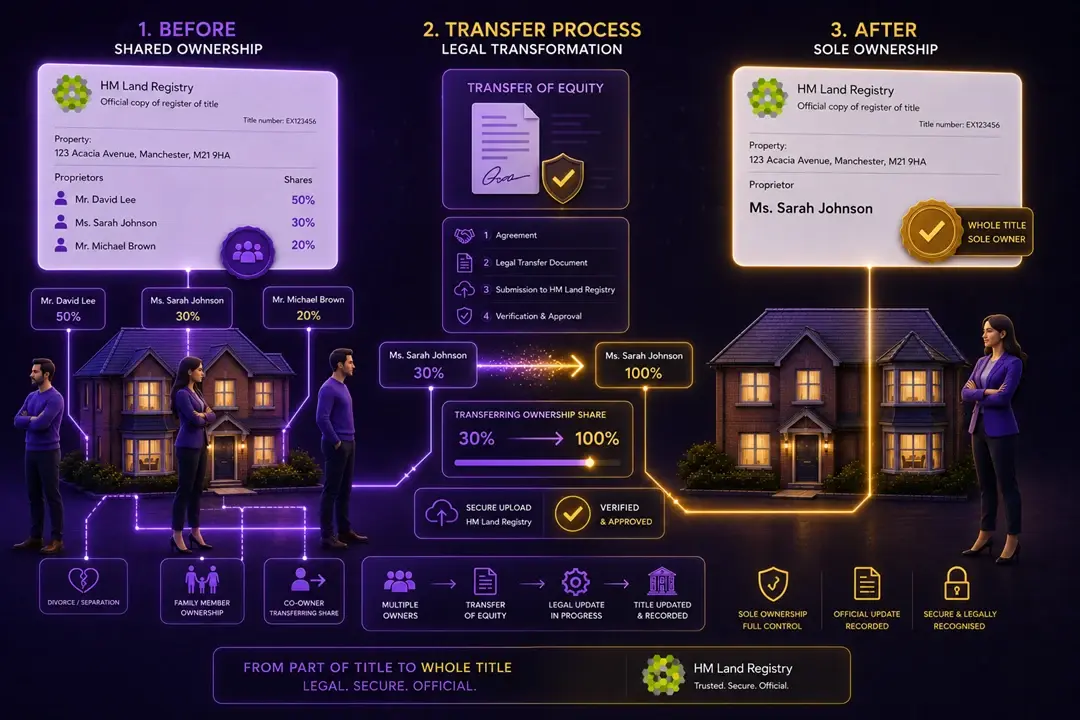
This process is usually done through a transfer of equity, which involves:
Steps:
- Agreement Between Parties
One or more owners transfer their share - Legal Documentation
Ownership details are updated - Submission to HM Land Registry
Title is officially updated
Common Situations:
- Buying out a co-owner
- Divorce or separation
- Inheritance restructuring
- Removing a family member from the title
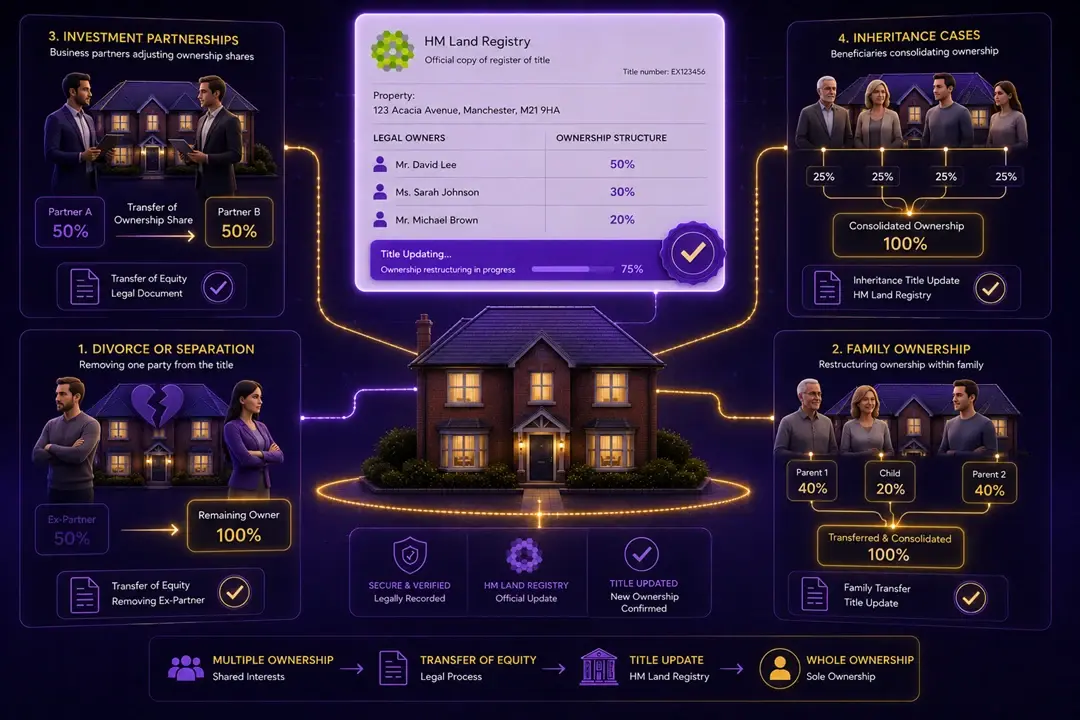
When Does This Matter Most?
Divorce or Separation
One party may want full ownership, requiring the removal of the other from the title.
Family Ownership
Parents and children sharing property may need to restructure ownership.
Investment Partnerships
Business partners may buy or sell shares over time.
Inheritance Cases
Multiple beneficiaries may initially hold part ownership, later consolidated.
A Smarter Way to Update Your Property Title
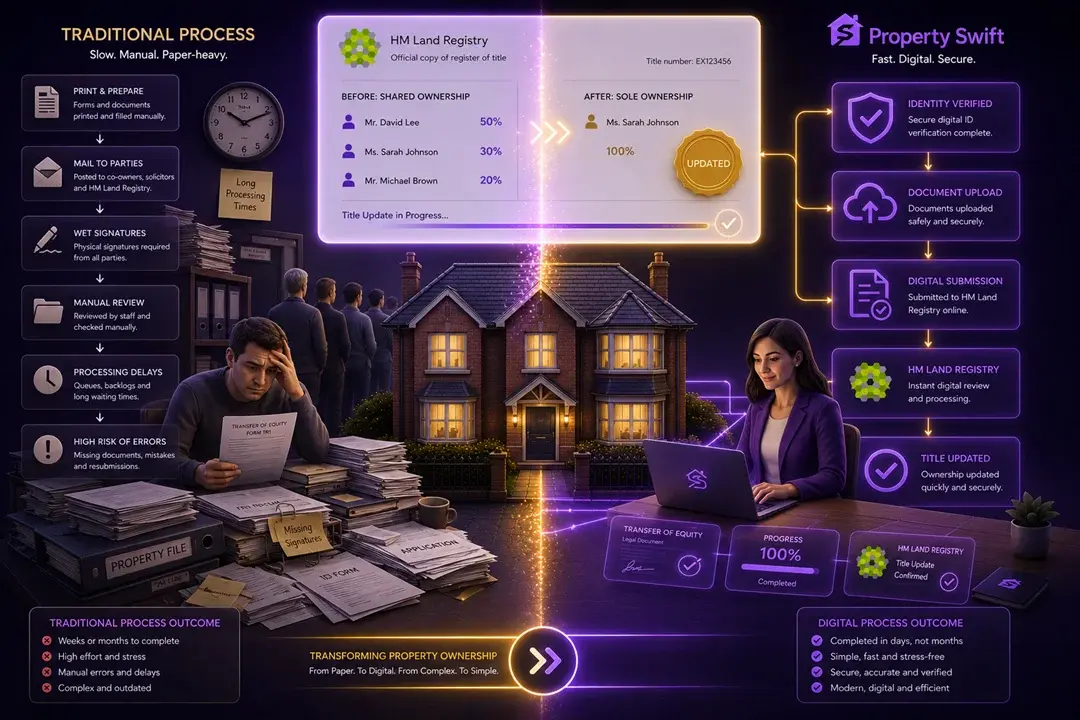
Changing from part ownership to full ownership, or restructuring your title isn’t just a formality. It involves legal documentation, identity verification, and updating records with HM Land Registry.
Traditionally, this process can be slow, paper-heavy, and difficult to manage without guidance. Property Swift simplifies this process.
How Property Swift Helps
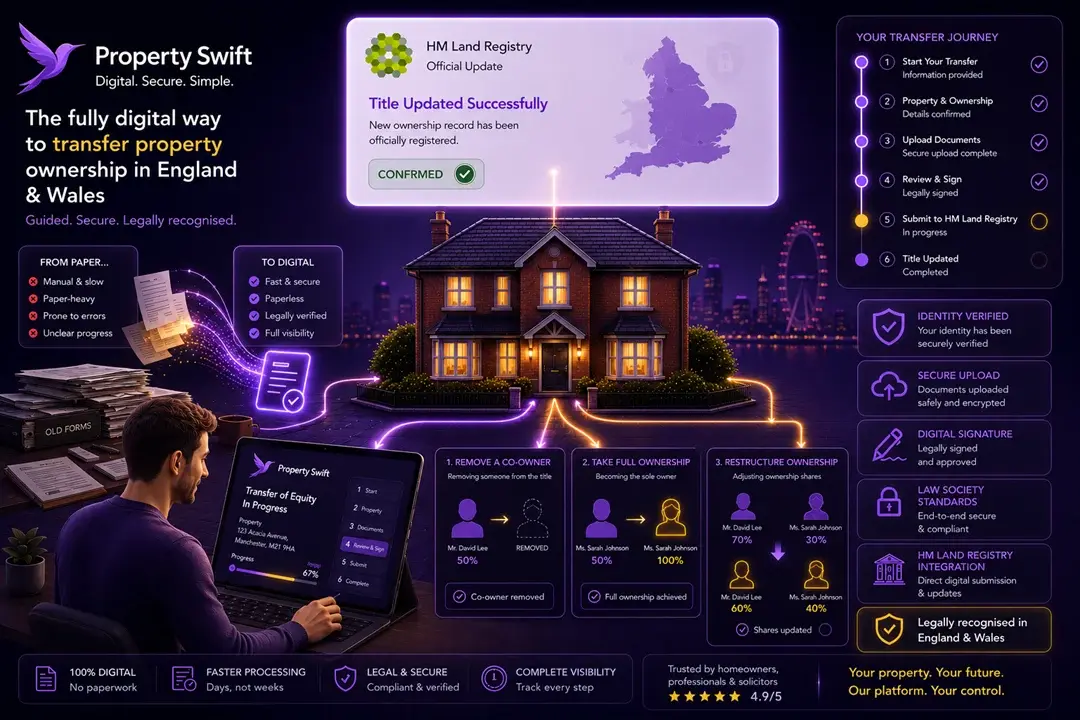
Property Swift provides a fully digital, guided solution for the transfer of property ownership in England and Wales.
Whether you're:
- Removing a co-owner
- Taking full ownership of a property
- Restructuring shares between multiple parties
Our platform is designed to make the process faster, clearer, and more accessible.
With Property Swift, you can:
- Start your online property transfer service from anywhere
- Complete identity checks securely online
- Submit required documents without paperwork delays
- Ensure your ownership update aligns with UK legal requirements
Every case is handled with structured guidance, helping you avoid common mistakes and unnecessary delays.
Ready to Take Full Control of Your Property?
Whether you're moving from shared ownership to full ownership — or restructuring your title — taking action now can prevent complications later.
Frequently Asked Questions
What does part of title mean in the UK?
Can I become the sole owner of a shared property?
Yes, typically through a transfer of equity.
Do all owners need to agree to transfer ownership?
In most cases, yes, unless legal action is involved.
Is the whole title better than the part of the title?
It depends on your situation. The whole title offers control, while part ownership allows shared investment.
How long does it take to update a property title?
Timelines vary depending on complexity and processing times.
Can I sell my share of a property?
Yes, but it may require agreement from other owners.