


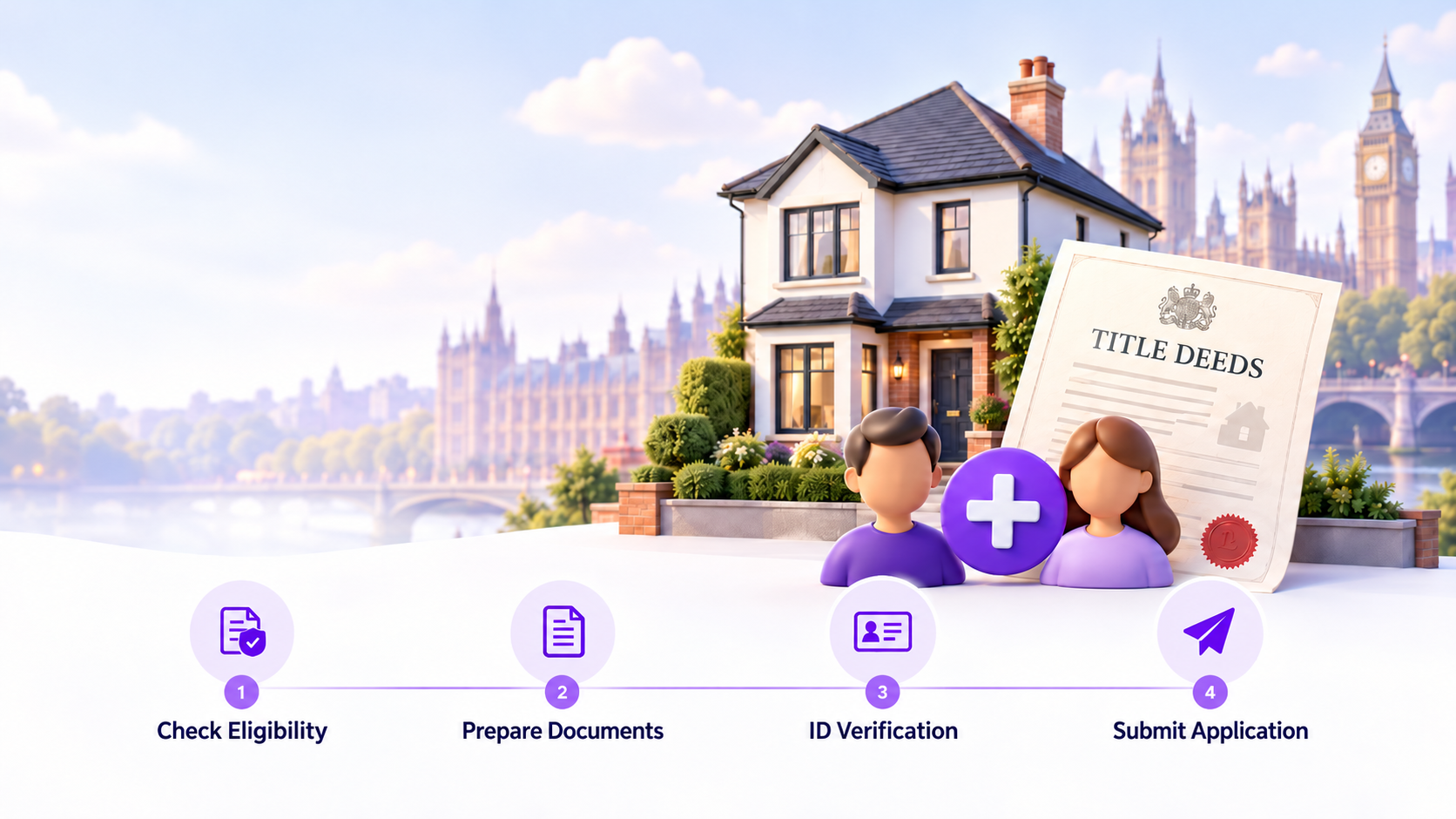
Yes, it may be possible to add someone to your house deeds without using a solicitor, particularly where the property is mortgage-free and the ownership change is straightforward.
In England and Wales, adding a spouse, partner or adult child to your property deeds generally involves transferring an interest in the property and registering the change with HM Land Registry.
However, adding someone as a new owner is different from simply changing an existing owner's name following marriage or a deed poll.
The process can involve transfer documents, identity verification and checks for restrictions on the property's registered title. If there is a mortgage, a trust or other complications, professional legal assistance may be necessary.
In this guide, we'll explain how to add someone to your house deeds, when you might need a solicitor, the documents involved and the potential costs.
We'll also explain how Property Swift can help with eligible property ownership changes through our self-service and solicitor-supported options.
Adding a Joint Owner vs Changing a Name on House Deeds
Although the terms sound similar, adding someone to your house deeds and changing an existing owner's name are two different processes.
1. Adding Someone as a Joint Owner
This involves changing the legal ownership of the property so that another person becomes a registered owner alongside the existing owner.
For example, a homeowner might want to:
- Add their husband or wife to the property deeds.
- Add an adult son or daughter as a joint owner.
- Add a partner to a mortgage-free property.
- Transfer a property from sole ownership into joint ownership.
In England and Wales, this generally requires a formal property transfer and an application to HM Land Registry.
For a registered property, forms TR1 and AP1 are commonly used, together with any necessary supporting documents, identity verification and registration fee.
2. Changing an Existing Owner's Name
This is different because the legal owner remains the same person.
For example, someone may need to update their registered name following:
- Marriage or civil partnership.
- Divorce.
- A change of name by deed poll.
This usually involves providing HM Land Registry with evidence of the name change rather than transferring ownership to another person.
Why Does This Difference Matter?
Adding a joint owner can have significant legal and financial consequences, including changes to ownership rights and possible tax implications.
Simply updating an existing owner's legal name does not, by itself, transfer ownership of the property.
Understanding the difference helps you identify which process is appropriate before preparing an application.
Do You Need a Solicitor to Add Someone to Your House Deeds?
No, you are not always legally required to use a solicitor to add someone to your house deeds in England and Wales.
HM Land Registry allows individuals to prepare and submit certain property ownership transfer applications themselves. However, the process involves legal requirements, and professional advice may be necessary depending on your circumstances.
When Can You Add Someone Without a Solicitor?
A self-service property transfer may be suitable where:
- The property is mortgage-free.
- The existing and proposed owners are all aged 18 or over.
- The property is already registered with HM Land Registry.
- There are no trusts or title restrictions requiring additional legal work.
- Everyone involved agrees to the ownership change.
- All parties can complete the required identity checks and sign the transfer documents.
Even where these conditions are met, it's important to understand the legal and financial consequences of adding another owner.
When Might You Need a Solicitor?
Professional conveyancing assistance may be necessary where:
- There is an existing mortgage: The lender may require a solicitor or licensed conveyancer.
- The property has title restrictions: Additional consents, certificates or legal documentation may be needed.
- Trust arrangements are involved: The intended beneficial ownership may need to be formally documented.
- There are disputes between owners: Independent legal advice may be needed.
- The ownership change has significant tax implications: Specialist tax advice may be appropriate.
What Does HM Land Registry Say?
HM Land Registry confirms that property owners can apply to transfer ownership themselves or use a solicitor or conveyancer.
For straightforward registered-property transfers, the process commonly involves forms TR1 and AP1, appropriate identity verification, supporting documents and the applicable registration fee.
However, HM Land Registry cannot provide legal advice or determine whether a particular transfer is suitable for you.
You can read the official HM Land Registry guidance on transferring property ownership.
What's Involved in Adding Someone to Your House Deeds?
Adding another person to your property deeds involves more than simply adding their name to a document. It is a formal change of legal ownership that must be correctly documented and registered with HM Land Registry.
For a straightforward property transfer, the process typically involves:
- Checking the property title: Establishing who currently owns the property and whether any mortgages or restrictions are registered.
- Deciding how the property will be owned: Understanding the difference between joint tenants and tenants in common.
- Preparing the transfer documentation: Completing the appropriate HM Land Registry forms and supporting documents.
- Verifying identities: Meeting the relevant identification requirements.
- Signing the documents: Ensuring the transfer deed is correctly executed.
- Registering the change: Submitting the completed application to HM Land Registry and addressing any subsequent queries.
Mistakes in the documents, signatures or supporting evidence can lead to delays or requests for further information.
Do You Have to Manage the Process Yourself?
Not necessarily.
Although HM Land Registry allows individuals to submit certain property transfers without a solicitor, some homeowners prefer assistance with preparing the documentation and understanding the administrative requirements.
Property Swift offers two options:
Self Service Property Transfer Service — £650
For eligible straightforward transfers, we provide administrative and document support and arrange the required identity verification. You sign and submit the application yourself.
Property Transfer Service – Solicitor Supported — £795
An independent regulated conveyancer handles the relevant legal work and Land Registry submission for suitable transactions.
Want to add someone to your house deeds?
Explore our property transfer services and compare the available options.
View Property Transfer Options & Prices
Frequently Asked Questions
Can I add my son or daughter to my house deeds?
Yes. You can generally add an adult son or daughter as a joint owner of your property. However, you should consider the legal, inheritance and potential tax consequences before proceeding.
Can I add my spouse to the deeds if the house is in my name?
Yes. A property registered in one spouse's name can generally be transferred into joint ownership. If the property has a mortgage, lender consent and additional legal work may be required.
Does adding someone to the deeds mean they own half the house?
Not necessarily. The legal owners may hold the property as joint tenants or tenants in common, with different implications for beneficial ownership and inheritance. If you intend unequal ownership shares, independent legal advice may be appropriate.
How long does it take to add someone to house deeds?
Preparing the documents for a straightforward transfer may be relatively quick, but HM Land Registry registration can take several months.
For more information, read our guide: How Long Does a Property Transfer Take?.
Will I have to pay Stamp Duty when adding someone to the deeds?
Not always. In England, Stamp Duty Land Tax may apply if chargeable consideration is involved, including taking responsibility for mortgage debt. A transfer made as a genuine gift without chargeable consideration may not attract SDLT.
Different land transaction tax rules apply in Wales, so the property's location matters.



Leave a Comment